What Does 585 Mean on Gold? Complete Guide
Learn what 585 means on gold jewelry. This complete guide explains the 585 fineness mark, its connection to 14 karat gold, value calculations, and how to verify authenticity.
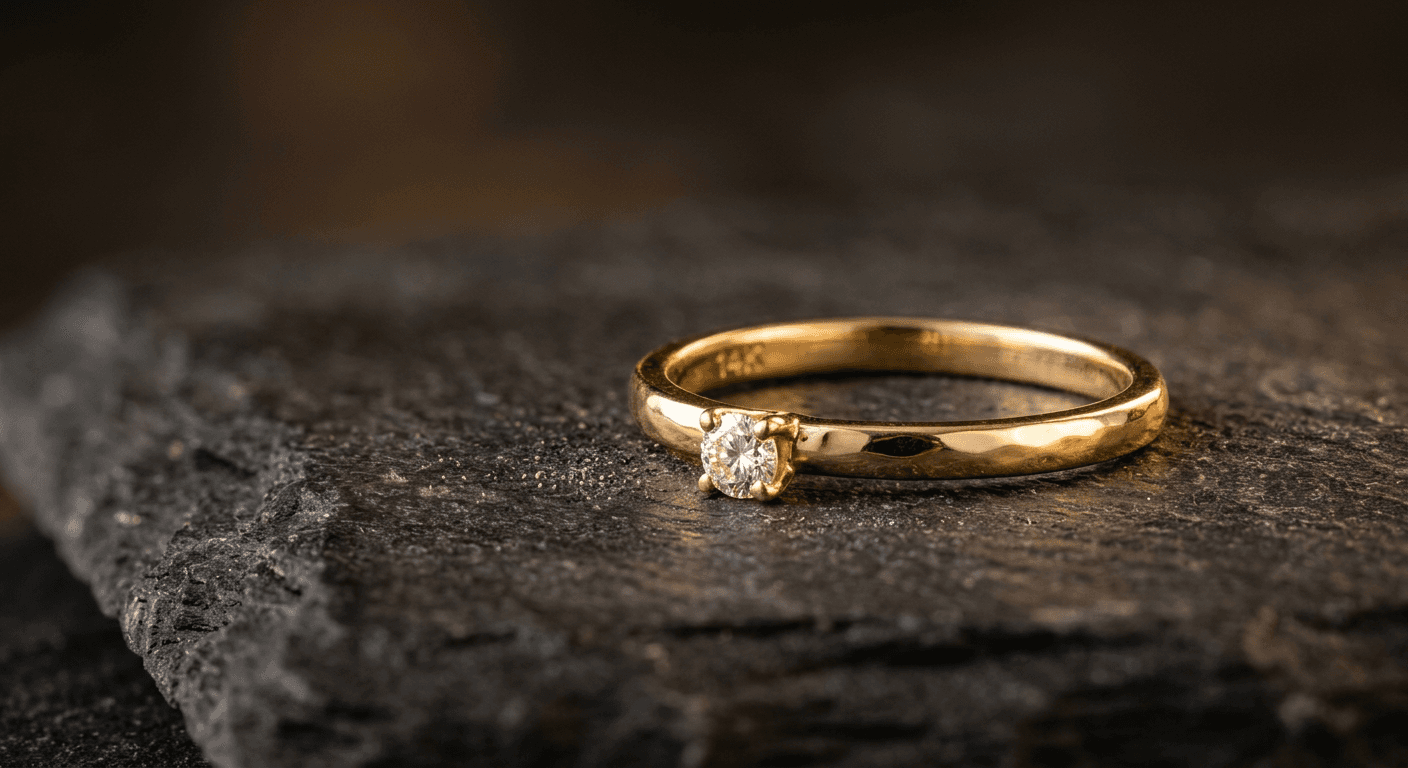
What Does 585 Mean on Gold?
If you have ever looked closely at a piece of gold jewelry and noticed the tiny number "585" stamped somewhere on the surface, you are not alone in wondering what it means. The 585 stamp is one of the most common markings found on gold jewelry worldwide, and understanding it is the first step toward becoming a more informed buyer, seller, or collector.
The number 585 indicates that the piece contains 58.5% pure gold. In the karat system used primarily in the United States, this corresponds to 14 karat gold (often written as 14K or 14kt). The remaining 41.5% consists of other metals -- typically copper, silver, zinc, or nickel -- that are alloyed with the gold to improve its strength, durability, and sometimes its color.
This guide will walk you through everything you need to know about 585 gold: where the number comes from, how it relates to the karat system, what your 585 jewelry might be worth, and how to verify that a 585 stamp is genuine.

The Fineness System Explained
The 585 marking belongs to what jewelers and metallurgists call the "fineness" or "millesimal fineness" system. This system expresses the purity of a precious metal as parts per thousand. Pure gold, with no alloys mixed in, has a fineness of 999 (or sometimes 999.9 for investment-grade bars).
Under this system, 585 means 585 parts out of 1,000 are pure gold -- in other words, 58.5% gold content. The fineness system is the international standard defined by ISO 9202, which specifies the standard fineness values for gold, silver, platinum, and palladium alloys used in jewelry.
Why Fineness Instead of Karats?
The karat system divides gold purity into 24 parts. Pure gold is 24 karats. Gold that is 14 parts gold and 10 parts alloy is 14 karat. The math works out simply:
14 / 24 = 0.5833...
Rounded to the nearest standard fineness value, this gives us 585.
The fineness system is preferred in most of Europe and in international trade because it is more precise. A karat value tells you a fraction out of 24, while a fineness value tells you parts per thousand. The karat system, on the other hand, is more widely recognized by consumers in the United States, Canada, and the United Kingdom.
Both systems describe the same thing. A ring stamped "585" and a ring stamped "14K" contain the same proportion of gold.
How 585 Relates to 14 Karat Gold
The connection between 585 and 14K is straightforward. To convert karats to fineness, divide the karat number by 24 and multiply by 1,000:
(14 / 24) x 1,000 = 583.33
The standard fineness mark is rounded to 585 to account for manufacturing tolerances. Under the ISO 9202 standard, a piece marked 585 must contain at least 585 parts per thousand of pure gold.
In practice, many countries allow a small negative tolerance. For example, some European hallmarking conventions permit a tolerance of minus 3 parts per thousand, meaning a piece stamped 585 must contain at least 582 parts per thousand gold. The exact tolerance depends on the jurisdiction and the hallmarking authority.
What About 583?
You may occasionally encounter the stamp "583" instead of "585." This was the standard fineness mark used in the Soviet Union and some Eastern European countries before the international adoption of ISO 9202. The difference between 583 and 585 is negligible -- both represent 14 karat gold -- but pieces stamped 583 typically originate from the Soviet era or from countries that followed the Soviet system.
Why 585 Gold Is So Popular
There are good reasons why 585 (14K) gold dominates the jewelry market in the United States and much of Europe. It hits a sweet spot between purity, durability, appearance, and price.
Durability
Pure gold (24K or 999 fineness) is remarkably soft. It scratches easily, bends under pressure, and is not suitable for everyday jewelry. By alloying gold down to 58.5% purity, manufacturers create a metal that is significantly harder and more resistant to wear. This makes 585 gold ideal for rings, bracelets, chains, and other pieces that endure daily use.
Appearance
At 58.5% gold content, jewelry still has a rich, warm gold color. While it is slightly less saturated than 18K (750) or 22K (916) gold, most consumers find 585 gold visually appealing. The alloy metals can also be adjusted to produce different colors -- yellow gold, white gold, and rose gold are all available in 585 formulations.
Affordability
Because it contains less pure gold than higher-karat options, 585 jewelry is more affordable per gram. For budget-conscious buyers who still want genuine gold, 14K offers the best balance of gold content and price. A 585 gold ring might cost 20% to 30% less than an equivalent piece in 750 (18K) gold, simply because it contains less of the precious metal.
Market Prevalence
In the United States, approximately 60% to 70% of all gold jewelry sold is 14 karat. It is the default choice for engagement rings, wedding bands, earrings, and everyday accessories. Many European countries, particularly Germany, Italy, and the Nordic nations, also produce large quantities of 585 gold jewelry.
Comparison of Common Gold Fineness Marks
The following table compares the most common gold fineness marks you are likely to encounter on jewelry, coins, and bullion.
| Fineness Mark | Karat Equivalent | Gold Purity (%) | Common Names | Typical Uses |
|---|---|---|---|---|
| 375 | 9K | 37.5% | 9 karat gold | Budget jewelry (UK, Australia) |
| 417 | 10K | 41.7% | 10 karat gold | Affordable jewelry (US, Canada) |
| 585 | 14K | 58.5% | 14 karat gold | Everyday jewelry (US, Europe) |
| 750 | 18K | 75.0% | 18 karat gold | Fine jewelry (worldwide) |
| 833 | 20K | 83.3% | 20 karat gold | Middle Eastern jewelry |
| 875 | 21K | 87.5% | 21 karat gold | Middle Eastern jewelry |
| 916 | 22K | 91.6% | 22 karat gold | Indian, Asian jewelry |
| 999 | 24K | 99.9% | Pure gold, fine gold | Investment bars, coins |
For a full breakdown of every karat level and its properties, see our gold karat chart. If you are trying to decide between 14K and 18K for a purchase, our 14K vs 18K gold comparison covers the trade-offs in detail.
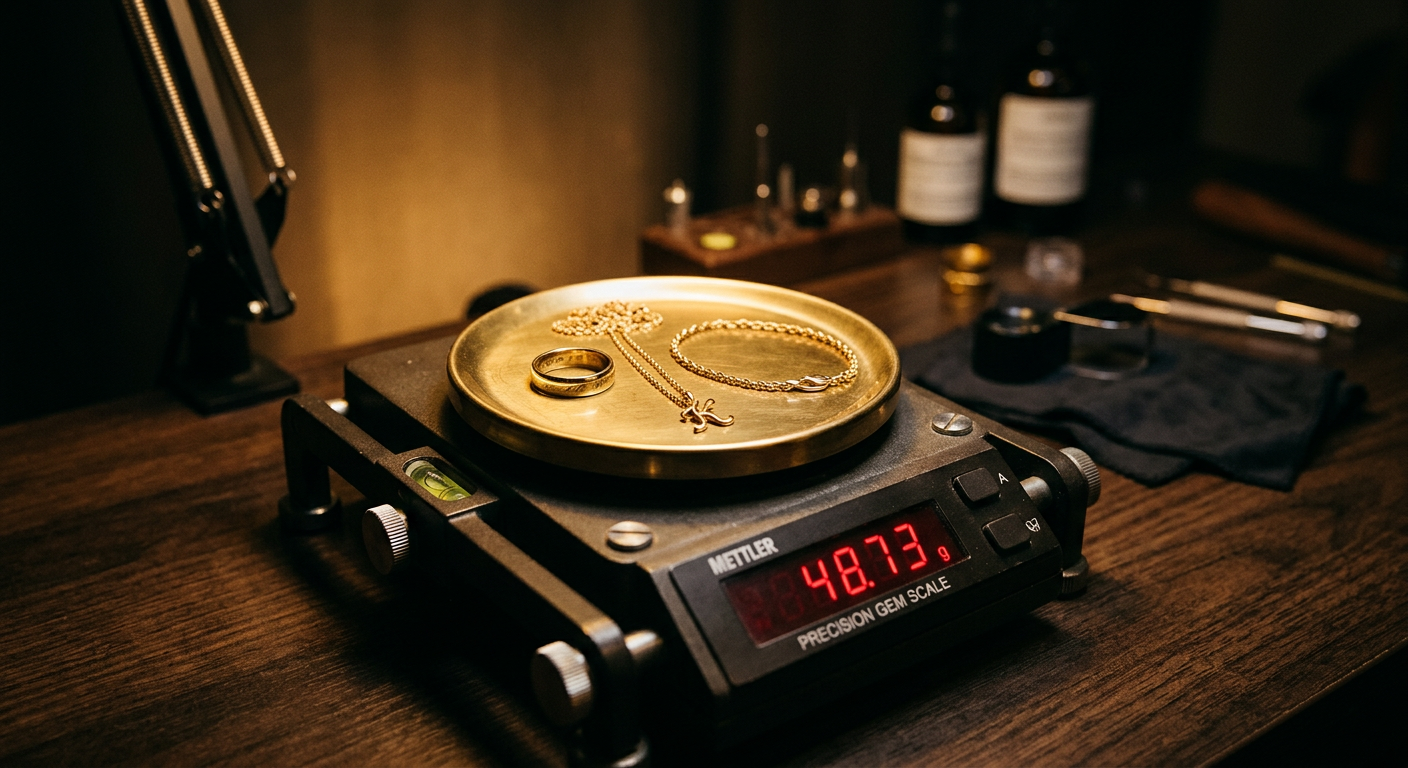
How to Calculate the Value of 585 Gold
One of the most common questions people ask when they discover the 585 stamp on their jewelry is: "What is it worth?" The value of 585 gold depends on three main factors: the current spot price of gold, the weight of the piece, and the gold content.
Step-by-Step Value Calculation
Here is the basic formula for estimating the melt value of 585 gold:
Melt Value = Weight (in grams) x Gold Purity x Spot Price Per Gram
Let us walk through an example. Suppose you have a 585 gold necklace that weighs 15 grams, and the current gold spot price is $2,034.50 per troy ounce.
-
Convert the spot price to grams. One troy ounce equals 31.1035 grams. $2,034.50 / 31.1035 = $65.41 per gram of pure gold
-
Multiply by the weight of your piece. 15 grams x $65.41 = $981.15 (this would be the value if the piece were pure gold)
-
Multiply by the fineness. $981.15 x 0.585 = $573.97
So the melt value of this 15-gram 585 gold necklace would be approximately $573.97 at that spot price.
You can use our gold karat calculator to run these calculations instantly with live spot prices.
Important Caveats
Melt value is not the same as retail value or resale value. Here are some factors that affect the actual price you might pay or receive:
- Retail markup: Jewelry stores typically charge 2x to 4x the melt value for finished pieces, accounting for design, craftsmanship, brand name, and overhead.
- Buyback discount: If you are selling gold to a dealer, expect to receive 70% to 90% of the melt value. Dealers need a margin to cover their costs and make a profit.
- Craftsmanship premium: Pieces from well-known designers or historic periods may command prices well above melt value.
- Gemstones: If the piece contains diamonds or other gemstones, those add value separately from the gold content.
- Scrap vs. resale: A generic chain sold for scrap will fetch close to melt value. A vintage signed piece sold at auction could bring many times its melt value.
These calculations provide an estimate based on metal content alone. They are not appraisals and should not be treated as guaranteed values.
How to Verify a 585 Gold Stamp
Finding a 585 stamp on your jewelry is encouraging, but stamps alone do not guarantee authenticity. Counterfeit gold jewelry exists, and some pieces are stamped with misleading markings. Here are the methods you can use to verify that your 585-marked jewelry is genuine.
Visual Inspection
Start by examining the stamp under magnification. Genuine hallmarks are typically clean, evenly struck, and consistent in depth. Look for additional marks near the 585 stamp -- many countries require a maker's mark (identifying the manufacturer), an assay office mark (identifying the testing authority), and sometimes a date letter.
European hallmarks often include a shape surrounding the fineness number. For example, in Finland, gold is marked within an oval shape. In the United Kingdom, the fineness number appears alongside a crown (for gold), an assay office symbol, and a date letter.
The Acid Test
The acid test is one of the oldest and most reliable methods for verifying gold purity. A small scratch from the jewelry is made on a testing stone, and nitric acid is applied. Gold of different purities reacts differently to various acid strengths. A 14K testing acid will dissolve metals below 14K purity but leave 14K and higher gold intact.
This test should be performed by a professional jeweler, as the acids involved are hazardous and can damage the piece if applied directly.
Electronic Gold Testers
Modern electronic testers use electrical conductivity or X-ray fluorescence (XRF) to determine gold purity without damaging the piece. XRF analyzers are the most accurate non-destructive method available. Many reputable jewelers and pawn shops have these machines and can test your piece in seconds.
Density Testing
Gold has a very high density -- 19.32 grams per cubic centimeter for pure gold. A 585 gold alloy has a density of approximately 12.9 to 14.0 g/cm3, depending on the specific alloy metals used. You can test density at home using a precise scale and a cup of water (Archimedes' method), though this works best for solid pieces without hollow sections or gemstones.
Magnet Test
Gold is not magnetic. If your jewelry is attracted to a strong neodymium magnet, it is either not gold or contains a significant amount of magnetic metal (such as iron or nickel core beneath gold plating). However, passing the magnet test does not confirm gold content -- many non-gold metals are also non-magnetic.
For a comprehensive guide to all verification methods, see our article on how to tell if gold is real.
The Alloy Composition of 585 Gold
Understanding what makes up the other 41.5% of 585 gold helps explain its properties and color variations.
Yellow Gold (585)
The classic yellow gold alloy at 585 fineness typically contains:
- 58.5% gold
- 25% to 30% copper
- 10% to 15% silver
- Small amounts of zinc
The copper adds warmth and strength, while the silver helps maintain a bright yellow tone. This is the most traditional and recognizable gold color.
White Gold (585)
White gold at 585 fineness replaces much of the copper with white metals:
- 58.5% gold
- 20% to 25% palladium or nickel
- 10% to 15% silver or zinc
- Sometimes small amounts of copper
Nickel-based white gold is more common due to cost, but palladium-based alloys are preferred for people with nickel sensitivity. Most white gold jewelry is rhodium-plated to enhance its bright silver-white appearance.
Rose Gold (585)
Rose gold gets its distinctive pinkish hue from a higher copper content:
- 58.5% gold
- 30% to 35% copper
- 5% to 10% silver
The more copper in the alloy, the more pronounced the rose color. Rose gold has enjoyed a surge in popularity in recent years, particularly for engagement rings and fashion jewelry.
585 Gold Around the World
The significance and perception of 585 gold varies by region and culture.
United States
In the US, 14K (585) gold is the most popular choice for jewelry. The Federal Trade Commission (FTC) requires that any item marked "14K" must contain at least 583 parts per thousand (58.3%) gold. Manufacturers typically aim for 585 to comfortably exceed this threshold. American jewelry usually carries the karat stamp (14K or 14kt) rather than the fineness number, though both are acceptable.
Europe
Many European countries use the fineness system as their primary marking. In Germany, Italy, Scandinavia, and Eastern Europe, you are more likely to see "585" than "14K." European hallmarking is regulated by the Vienna Convention on the Control of the Fineness and the Hallmarking of Precious Metal Objects, which standardizes hallmarking practices among its member states.
United Kingdom
The UK has one of the oldest hallmarking systems in the world, dating back to 1300. British hallmarks are applied by one of four assay offices (London, Birmingham, Sheffield, and Edinburgh). A 585 gold item hallmarked in the UK will carry the fineness number 585 inside a specific shape, along with the assay office mark, maker's mark, and an optional date letter.
Asia and the Middle East
In many Asian and Middle Eastern cultures, higher-purity gold (22K or 24K) is preferred, particularly for wedding jewelry and investment pieces. While 585 gold is available in these markets, it is often considered "low purity" relative to regional preferences. In India, for example, 22K (916) gold dominates the market, and 14K jewelry carries less cultural significance.
585 Gold vs. 750 Gold: Key Differences
One of the most common comparisons shoppers make is between 585 (14K) and 750 (18K) gold. Here is a quick overview of the main differences:
| Property | 585 Gold (14K) | 750 Gold (18K) |
|---|---|---|
| Gold content | 58.5% | 75.0% |
| Durability | Higher - more resistant to scratching | Lower - softer metal |
| Color richness | Warm gold tone | Deeper, more saturated gold |
| Price per gram | Lower | Higher (roughly 25-30% more) |
| Skin sensitivity | May contain nickel (white gold) | Less likely to cause reactions |
| Best for | Everyday wear, active lifestyles | Fine jewelry, sensitive skin |
For a deeper comparison, read our full guide on 14K vs 18K gold.
The ISO 9202 Standard
The International Organization for Standardization publishes ISO 9202, titled "Jewellery and precious metals -- Fineness of precious metal alloys." This standard defines the recognized fineness values for gold, silver, platinum, and palladium used in jewelry manufacturing.
For gold, ISO 9202 recognizes the following fineness values: 375, 585, 750, 916, 990, and 999. Each value represents the minimum parts per thousand of pure gold that must be present in an alloy carrying that mark.
The standard also specifies testing methods and tolerances. Most national hallmarking systems reference ISO 9202 as the basis for their own regulations, though some countries recognize additional fineness values (such as 417 for 10K in the United States and 833 for 20K in some Middle Eastern nations).
Caring for Your 585 Gold Jewelry
While 585 gold is more durable than higher-karat alternatives, it still requires proper care to maintain its appearance over time.
Cleaning
Clean your 585 gold jewelry regularly with warm water, a few drops of mild dish soap, and a soft-bristled brush (like a soft toothbrush). Soak the piece for 10 to 15 minutes, gently brush away any buildup, rinse thoroughly, and pat dry with a soft cloth.
Avoid harsh chemicals, chlorine (swimming pools and hot tubs), and abrasive cleaners. These can damage the alloy metals and dull the surface.
Storage
Store gold pieces separately to prevent scratching. Use individual soft pouches, lined jewelry boxes, or compartmentalized organizers. Gold is relatively soft even at 585 fineness, and it can be scratched by harder metals or gemstones.
Professional Maintenance
For pieces you wear daily, consider having them professionally inspected and polished once a year. A jeweler can check prong settings (especially important for pieces with gemstones), buff out minor scratches, and apply fresh rhodium plating to white gold items.
Common Questions About 585 Gold
Is 585 gold real gold?
Yes. Jewelry stamped 585 contains 58.5% pure gold alloyed with other metals. It is genuine gold, not gold-plated or gold-filled. The 585 fineness mark is internationally recognized under ISO 9202.
Is 585 the same as 14K?
Yes. The 585 fineness mark and the 14K karat mark both indicate gold that is 58.5% pure. They are two different systems for expressing the same gold content. The fineness system (585) is more common in Europe, while the karat system (14K) is more common in the United States.
Can 585 gold tarnish?
Pure gold does not tarnish, but the alloy metals in 585 gold (particularly copper and silver) can oxidize over time, especially when exposed to moisture, sweat, or chemicals. This may cause a slight discoloration that can usually be cleaned with gentle polishing.
Is 585 gold good for engagement rings?
Absolutely. The 585 (14K) alloy is one of the most popular choices for engagement rings because it offers a good balance of beauty, durability, and value. It is hard enough to withstand daily wear while still displaying a warm gold color. Most major jewelry brands offer engagement ring settings in 14K gold.
How can I tell if my 585 gold is fake?
Look for the 585 stamp under magnification, check for additional hallmarks (maker's mark, assay office mark), and consider having the piece tested by a professional jeweler using an electronic tester or XRF analyzer. Our guide on how to tell if gold is real covers every method in detail.
Summary
The 585 stamp on gold jewelry tells you that the piece contains 58.5% pure gold, which is equivalent to 14 karats. This is the most popular gold purity in the United States and much of Europe, prized for its balance of beauty, durability, and affordability.
Whether you are buying, selling, or simply curious about a piece you already own, understanding the 585 marking gives you a solid foundation for making informed decisions. Use our gold karat calculator to check the current value of your 585 gold based on live spot prices, and explore our gold karat chart for a complete reference to every gold purity level.