What Does 750 Mean on Gold Jewelry?
Discover what the 750 stamp means on gold jewelry. This guide covers 18 karat gold purity, European hallmarking, color variations, value, and how 750 compares to other gold fineness marks.
What Does 750 Mean on Gold Jewelry?
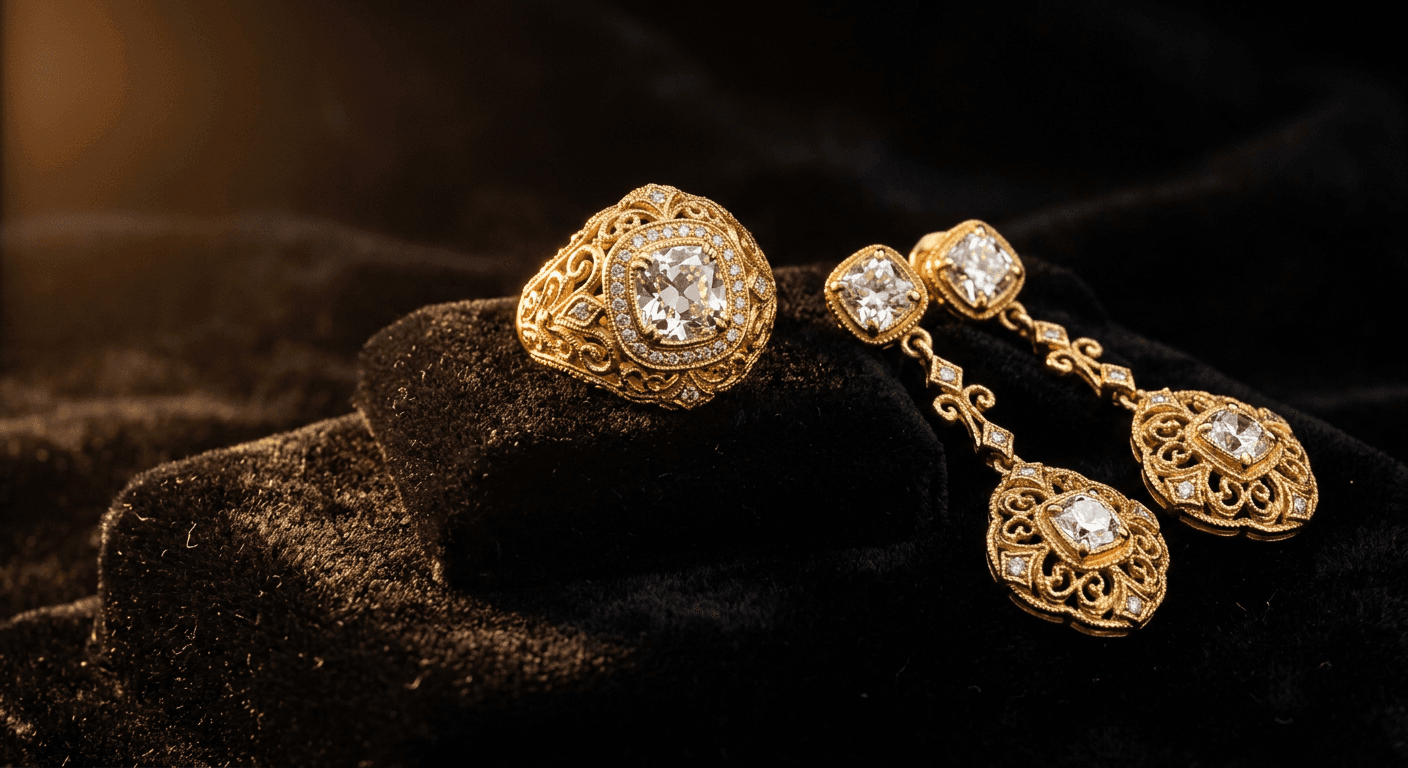
The number 750 stamped on a piece of gold jewelry is one of the most significant markings in the precious metals world. It tells you that the item contains 75.0% pure gold -- the equivalent of 18 karat gold. This purity level is widely regarded as the global standard for fine jewelry, balancing a rich gold color and luxurious feel with enough structural integrity to be worn and enjoyed for generations.
If you have found the 750 stamp on a ring, necklace, bracelet, or pair of earrings, you are holding a piece that sits firmly in the "fine jewelry" category. This guide will explain everything you need to know about 750 gold: what the number means, how the marking system works, how 750 compares to other gold purities, and how to determine the value of your piece.
Understanding the 750 Fineness Mark
The 750 stamp belongs to the millesimal fineness system, which expresses the purity of a precious metal as parts per thousand. Under this system, pure gold has a fineness of 999 (or 999.9 for the highest-grade investment bullion). A fineness of 750 means that out of every 1,000 parts of the alloy, 750 parts are pure gold.
This system is defined by ISO 9202, the international standard published by the International Organization for Standardization that governs recognized fineness values for gold, silver, platinum, and palladium in jewelry. The 750 fineness value is one of the primary standard values listed in ISO 9202.
The Karat Conversion
To convert from fineness to karats, the math is simple:
750 / 1,000 x 24 = 18
So 750 fineness equals 18 karats. Conversely, to go from karats to fineness:
18 / 24 x 1,000 = 750
Unlike the 585 fineness mark (which is rounded up from the precise value of 583.33), the 750 mark aligns exactly with the karat fraction: 18/24 = 0.750, or 750 parts per thousand. This mathematical precision is one reason why 750 (18K) is considered a benchmark purity level in the industry.
Why 750 Gold Is the Global Fine Jewelry Standard
While 585 gold (14K) dominates the everyday jewelry market in the United States, 750 gold (18K) is the undisputed standard for fine jewelry worldwide. There are several reasons for this status.
Rich Gold Color
At 75% gold content, 750 gold displays a noticeably deeper, warmer, and more saturated yellow than lower-purity alloys. The higher proportion of gold gives the metal a luxurious appearance that many jewelers and consumers consider the ideal balance between color richness and practicality. While 22K and 24K gold have even more saturated color, they sacrifice too much durability for most jewelry applications.
International Acceptance
In most of the world's major jewelry markets -- including Italy, France, Switzerland, Japan, and much of Southeast Asia -- 18K (750) is the minimum purity considered appropriate for fine jewelry. Many prestigious jewelry houses, including Cartier, Tiffany, Bulgari, and Van Cleef and Arpels, use 18K gold as their standard for gold pieces.
The Balance Point
Gold jewelry design is always a negotiation between purity and practicality. Pure gold is too soft for everyday wear. Low-karat alloys are durable but lack the color and prestige of gold. At 750 fineness, jewelers have enough gold to achieve a beautiful color and enough alloy metal (25%) to create a reasonably durable finished piece. It is not as hard as 585 gold, but it is far more practical than 22K or 24K for rings, bracelets, and other items that experience regular contact and friction.
Skin Compatibility
Higher-purity gold is less likely to cause allergic reactions. The most common jewelry allergen is nickel, which is sometimes used in lower-karat white gold alloys. At the 750 level, particularly in yellow and rose gold formulations, the alloy composition is gentler on sensitive skin. Many dermatologists recommend 18K gold for people who experience reactions to costume jewelry or lower-karat gold pieces.
The European Hallmarking System
The 750 gold mark is deeply embedded in European hallmarking tradition -- a system that dates back centuries and remains one of the most rigorous quality assurance frameworks in consumer goods.
A Brief History
Hallmarking originated in London in the year 1300, when King Edward I enacted a statute requiring all gold and silver articles to be tested and marked by the Goldsmiths' Company at Goldsmiths' Hall (hence "hallmark"). The practice spread across Europe over the following centuries, and today most European countries maintain official assay offices that test and stamp precious metal items.
The Vienna Convention
The modern international framework for hallmarking is the Convention on the Control of the Fineness and the Hallmarking of Precious Metal Objects, commonly known as the Vienna Convention or the Hallmarking Convention. Signed in 1972 and updated periodically, this treaty establishes mutual recognition of hallmarks among its member states.
Under the Vienna Convention, a 750 gold item tested and hallmarked in any member country (including the UK, Switzerland, Austria, the Netherlands, Sweden, and others) is recognized across all member states. The common control mark (CCM) for gold consists of a balance scale inside a specific shape, accompanied by the fineness number.
National Hallmark Formats
Different countries have distinct hallmark formats, but all convey similar information for 750 gold:
- France: An eagle's head stamp indicates 18K gold. France has maintained its own pictorial hallmarking system alongside numeric fineness marks.
- Italy: The number 750 is stamped alongside a star and a provincial code number identifying the manufacturer.
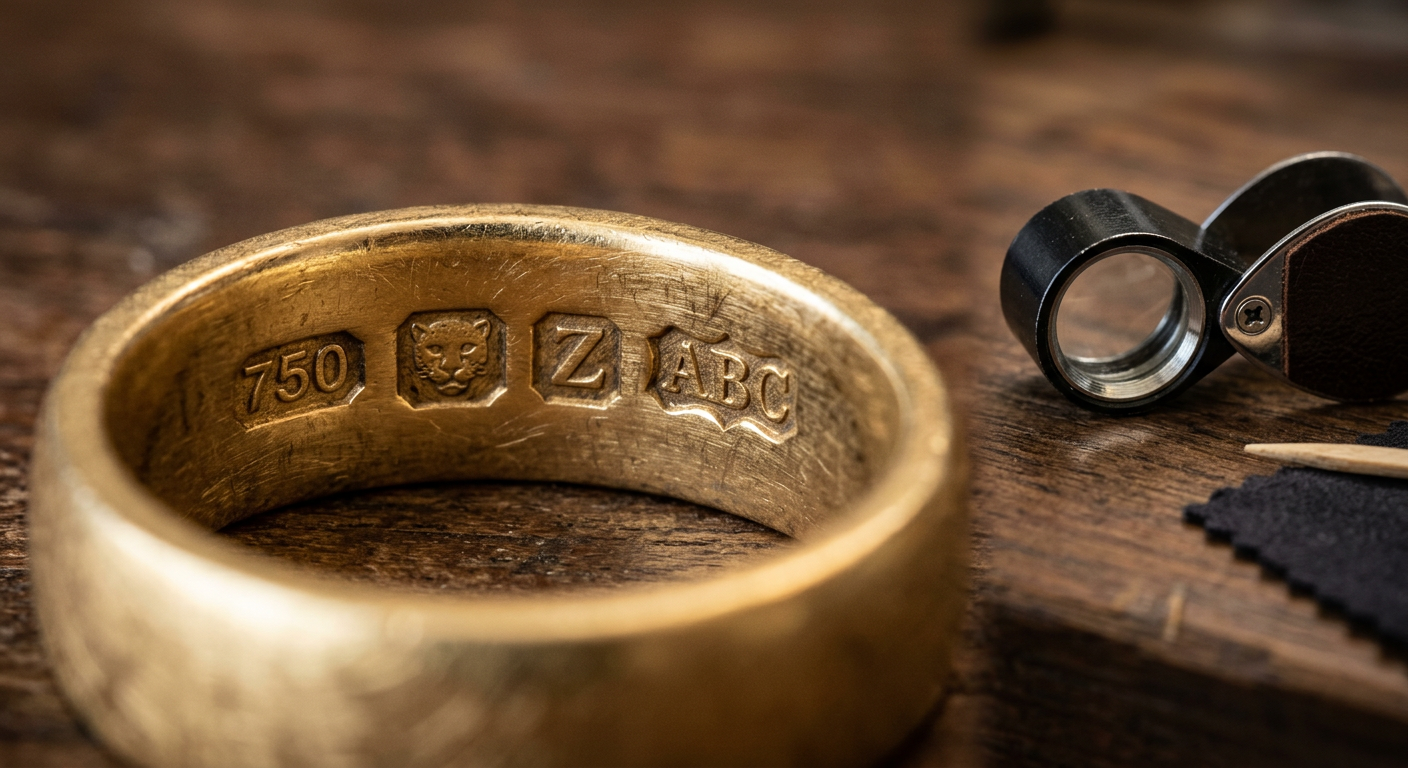
- United Kingdom: The number 750 appears inside an octagonal shape (for gold), accompanied by the assay office mark (leopard's head for London, anchor for Birmingham, rose for Sheffield, castle for Edinburgh), a maker's mark, and optionally a date letter.
- Switzerland: Swiss precious metal items carry the head of a St. Bernard dog for gold, along with the fineness number and a maker's mark.
- Germany: German hallmarks include the fineness number (750), a crescent moon and crown (the national German precious metals mark), and the manufacturer's mark.
FTC Guidelines in the United States
In the United States, hallmarking is not mandatory, but the Federal Trade Commission (FTC) regulates how gold items can be marketed and marked. According to the FTC's Guides for the Jewelry, Precious Metals, and Pewter Industries (16 CFR Part 23), any item stamped or advertised as "18K" or "18 karat" must contain at least 750 parts per thousand of pure gold.
The FTC allows a negative tolerance for manufacturing variation but requires that the gold content be "not less than the fineness marked." Items that do not meet the stated karat or fineness standard are considered misbranded. Sellers who use karat stamps must also include a registered trademark or maker's mark adjacent to the karat stamp.
Color Variations of 750 Gold
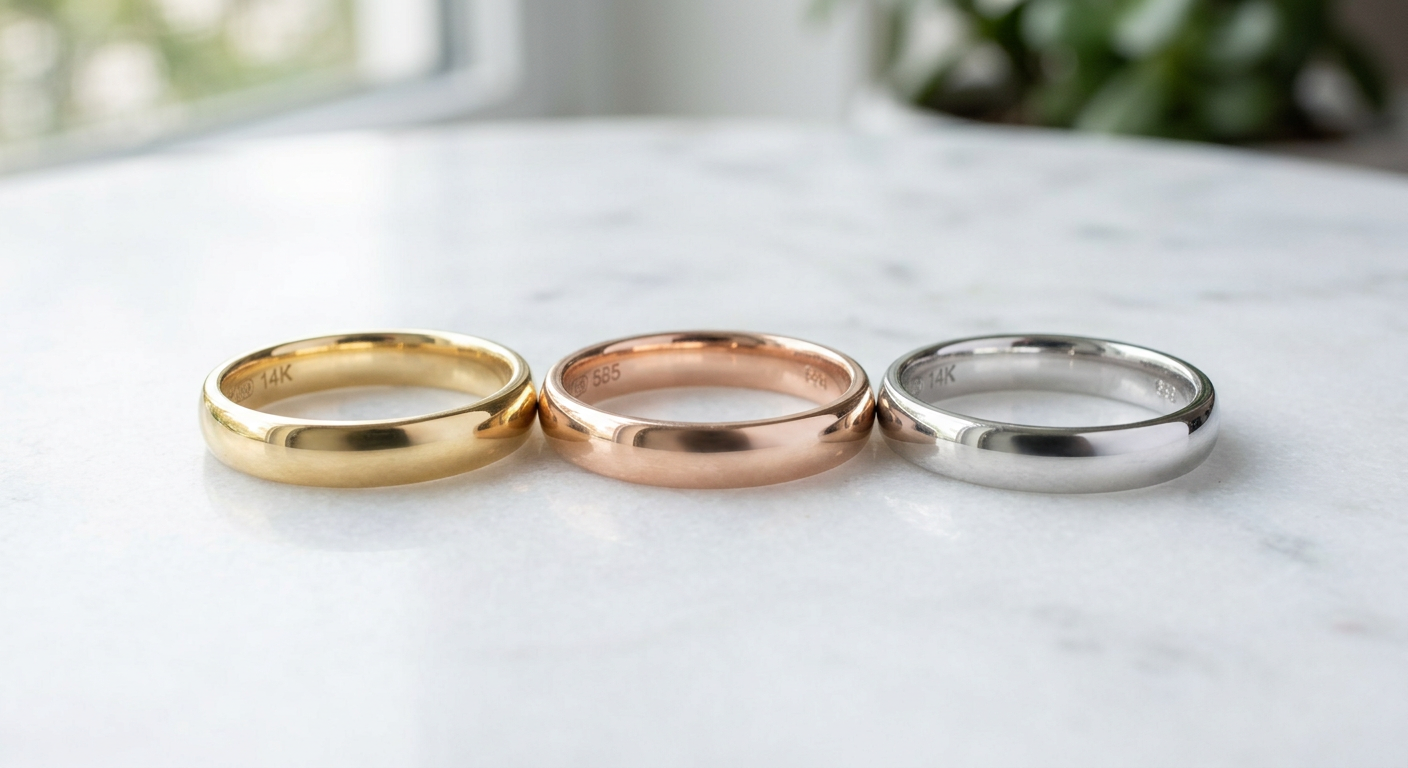
One of the most appealing aspects of 750 gold is that the 25% alloy content can be adjusted to produce strikingly different colors. The three primary color options are yellow, white, and rose, but within each category there is a range of shades depending on the exact alloy recipe.
Yellow Gold (750)
The classic yellow gold formulation at 750 fineness typically uses:
- 75.0% gold
- 12% to 15% silver
- 10% to 12% copper
- Small amounts of zinc
This produces a warm, rich yellow that is noticeably deeper than 14K yellow gold. The higher gold content means the natural warm tone of gold itself dominates the color, with the silver and copper supporting rather than diluting it.
White Gold (750)
White gold at 750 fineness requires white-colored alloy metals to counteract gold's natural yellow tone:
- 75.0% gold
- 10% to 15% palladium (premium formulation)
- Or 10% to 15% nickel (more affordable formulation)
- Balance of silver, zinc, or copper
Palladium-based 18K white gold has a naturally grayish-white appearance and is hypoallergenic, making it the preferred choice for high-end jewelry. Nickel-based formulations are less expensive but can trigger allergic reactions in sensitive individuals. Regardless of the base alloy, most white gold jewelry receives a rhodium plating to achieve a bright, mirror-like silver-white finish.
The European Union's REACH regulation restricts the amount of nickel that can be released from jewelry in contact with the skin, which has pushed many European manufacturers toward palladium-based white gold formulations.
Rose Gold (750)
Rose gold (sometimes called pink gold or red gold) uses a higher proportion of copper:
- 75.0% gold
- 20% to 22.5% copper
- 2.5% to 5% silver
The copper gives the alloy its distinctive warm, pinkish hue. The more copper in the mix, the more pronounced the rose color. Rose gold has experienced a major surge in popularity since the early 2010s, driven by fashion trends and its distinctive appearance in engagement rings and watches.
Other Colors
Some specialty jewelers produce more unusual gold colors at 750 fineness:
- Green gold: Higher silver content (up to 20-25%) produces a subtle greenish-yellow tone.
- Gray gold: Small additions of iron or manganese create a muted gray appearance.
- Purple gold: An intermetallic compound of gold and aluminum (not a traditional alloy), which is brittle and used mainly as an accent material.
These specialty colors are rare in commercial jewelry but demonstrate the versatility of gold alloys.
750 Gold Compared to Other Fineness Marks
Understanding how 750 gold fits into the broader spectrum of gold purities helps you make informed purchasing decisions. Here is a comprehensive comparison.
| Fineness | Karat | Gold Content | Color Depth | Durability | Price Range | Common Markets |
|---|---|---|---|---|---|---|
| 375 | 9K | 37.5% | Pale yellow | Very high | Lowest | UK, Australia |
| 417 | 10K | 41.7% | Light yellow | High | Low | US, Canada |
| 585 | 14K | 58.5% | Warm yellow | High | Moderate | US, Europe |
| 750 | 18K | 75.0% | Rich yellow | Moderate | Higher | Worldwide (fine) |
| 833 | 20K | 83.3% | Deep yellow | Lower | High | Middle East |
| 916 | 22K | 91.6% | Very deep yellow | Low | Very high | India, Asia |
| 999 | 24K | 99.9% | Intense yellow | Very low | Highest | Bullion, investment |
750 vs. 585: The Core Comparison
The most common comparison shoppers face is between 750 (18K) and 585 (14K) gold. Here is a detailed breakdown:
Gold content: 750 gold contains 75% pure gold compared to 58.5% for 585 gold. That is a 28% increase in gold content, which directly affects both appearance and price.
Color: 750 gold has a richer, more saturated yellow tone. When you place a 14K piece next to an 18K piece of the same design, the color difference is visible. Some people prefer the deeper 18K color, while others find the lighter 14K tone perfectly attractive.
Durability: 585 gold is harder and more scratch-resistant. For people with active lifestyles, or for items like wedding bands that endure constant wear, 14K may be the more practical choice. However, 18K gold is still durable enough for daily wear -- millions of people wear 18K rings every day without issues.
Price: Expect to pay roughly 25% to 35% more for a 750 gold piece compared to an equivalent 585 piece, though the exact premium varies by retailer and design complexity.
Resale value: Both purities retain value well, but 750 gold contains more pure gold per gram, which means its melt value is proportionally higher. In international markets where 18K is the standard, 750 gold items may also command better resale prices.
For an in-depth comparison with side-by-side analysis, see our guide on 14K vs 18K gold.
How to Calculate the Value of 750 Gold
Estimating the value of your 750 gold jewelry starts with the same basic formula used for any gold purity.
The Formula
Melt Value = Weight (grams) x Purity (0.750) x Spot Price Per Gram
Worked Example
Suppose you have an 18K gold bracelet that weighs 25 grams, and the current gold spot price is $2,034.50 per troy ounce.
-
Convert spot price to price per gram. One troy ounce = 31.1035 grams. $2,034.50 / 31.1035 = $65.41 per gram (pure gold)
-
Calculate the pure gold content. 25 grams x 0.750 = 18.75 grams of pure gold
-
Calculate the melt value. 18.75 grams x $65.41 = $1,226.44
So the melt value of this 25-gram 750 gold bracelet would be approximately $1,226.44 at that spot price.
You can run these calculations instantly using our gold karat calculator, which pulls live spot price data.
Beyond Melt Value
As with all gold jewelry, melt value represents only the base metal value. The actual market value of your piece depends on additional factors:
- Brand and designer: A Cartier Love bracelet in 18K gold sells for many times its melt value due to brand prestige and demand.
- Craftsmanship: Hand-finished pieces, complex metalwork, and artisan jewelry carry a premium.
- Age and provenance: Antique and vintage 750 gold pieces, particularly those with documented provenance, can be highly collectible.
- Condition: Well-maintained pieces with minimal scratches and intact components are worth more than damaged items.
- Gemstones: If the piece contains diamonds, sapphires, or other precious stones, their value is calculated separately.
Remember that these estimates reflect metal content value only and should not be treated as appraisals or guaranteed purchase prices.
Durability and Everyday Wear
A common concern about 750 gold is whether it is durable enough for daily wear. The short answer is yes, with some considerations.
Hardness
On the Vickers hardness scale, 750 yellow gold typically measures between 135 and 170 HV (depending on the exact alloy and heat treatment), compared to around 155 to 185 HV for 585 gold. Pure gold measures only about 25 HV. So while 750 gold is softer than 585 gold, it is still many times harder than pure gold and is perfectly serviceable for rings, bracelets, and other everyday pieces.
Scratch Resistance
750 gold will accumulate scratches over time, particularly on surfaces that experience frequent contact (like the outside of a ring band). However, these scratches create what jewelers call a "patina" -- a soft, slightly matte surface that many people find attractive. Minor scratches can be buffed out by a professional jeweler during routine maintenance.
Bend and Deformation Resistance
Because 750 gold is softer than 585 gold, thin elements (like ring shanks, bracelet links, or chain links) are more susceptible to bending or deformation under stress. Jewelers account for this by designing 18K pieces with slightly thicker proportions in structural areas. If you work with your hands or have an active lifestyle, consider a slightly wider band or a more robust link design when choosing 750 gold.
Suitability by Jewelry Type
- Engagement rings and wedding bands: Excellent choice. Select a setting style appropriate for the stone size and a band width of at least 2mm for durability.
- Necklaces and pendants: Ideal. Chains in 750 gold are beautiful but should not be excessively thin for daily wear.
- Earrings: Perfect, as earrings experience minimal physical stress.
- Bracelets: Good choice, but consider a design with some structural heft, as bracelets endure more contact than most other jewelry types.
Skin Sensitivity and Hypoallergenic Properties
Gold itself is hypoallergenic -- it does not cause allergic reactions. Skin reactions to gold jewelry are almost always caused by the alloy metals, particularly nickel.
At the 750 (18K) level, the risk of allergic reactions is significantly lower than with lower-karat gold, for several reasons:
- Higher gold percentage: More gold means less alloy metal in contact with the skin.
- Alloy selection: Many 18K formulations, particularly yellow and rose gold, use copper and silver as the primary alloy metals. These are far less likely to cause reactions than nickel.
- White gold considerations: If you are sensitive to nickel, choose a palladium-based 18K white gold rather than a nickel-based formulation. Alternatively, a rhodium-plated finish creates a barrier between the nickel alloy and your skin, though this plating wears off over time and needs periodic renewal.
If you have a known metal sensitivity, 750 gold (particularly in yellow or rose) is generally a safe and comfortable choice.
750 Gold as an Investment
While gold jewelry is not typically purchased as a pure investment vehicle (the retail markup makes it less efficient than bullion), 750 gold holds its value well over time.
Melt Value Floor
Every piece of 750 gold jewelry has an intrinsic melt value based on its gold content and the current spot price. This provides a "floor" value that the piece is unlikely to drop below, regardless of fashion trends or brand perception. As gold prices have generally trended upward over the long term, the melt value floor tends to rise over time.
Resale Market
750 gold is highly liquid in the resale market. Pawn shops, gold dealers, online buyers, and auction houses all actively purchase 18K gold. Because 750 is the international fine jewelry standard, it is recognized and valued worldwide, making it easy to sell in any major market.
Comparison to Lower Purities
Gram for gram, 750 gold contains more pure gold than 585 gold, which means it retains a higher proportion of its purchase price as melt value. If you buy a $500 piece of 585 gold jewelry, perhaps $150 to $200 of that price represents gold content. For a $700 piece of 750 gold jewelry of similar design, perhaps $250 to $350 represents gold content. The higher the gold content, the more resilient the piece's baseline value.
How to Verify the Authenticity of 750 Gold
As with any precious metal, verification is important. Here are the key methods for confirming that a piece marked 750 is genuinely 18K gold.
Hallmark Examination
Examine the 750 stamp and any accompanying hallmarks under magnification (a 10x jeweler's loupe works well). Genuine hallmarks are clean, evenly impressed, and consistent in depth. Look for supporting marks: a maker's mark, an assay office mark (if European), and any national symbols. The presence of multiple official hallmarks is a strong indicator of authenticity.
Professional Testing
The most reliable verification method is professional testing. An XRF (X-ray fluorescence) analyzer can determine the exact composition of the metal in seconds without damaging the piece. Most reputable jewelers, pawn shops, and precious metal dealers have access to XRF machines.
Acid Testing
The traditional acid test uses a calibrated acid solution to determine gold purity. An 18K testing solution will dissolve metals below 18K but leave genuine 750 gold intact. This test leaves a small mark on the piece and should be performed by an experienced professional.
At-Home Checks
While not definitive, these quick checks can help identify obvious fakes:
- Magnet test: Gold is not magnetic. If the piece is attracted to a strong magnet, it is not solid gold.
- Weight test: Gold is very dense. A genuine 750 gold piece should feel noticeably heavier than a piece of similar size made from base metal.
- Discoloration: Look for areas where a gold-colored surface has worn away to reveal a different metal underneath. This indicates plating, not solid gold.
For a complete walkthrough of every authentication method, read our guide on how to tell if gold is real.
Caring for 750 Gold Jewelry
Proper care ensures your 750 gold pieces maintain their beauty over years and decades of wear.
Regular Cleaning
Clean your 750 gold jewelry every few weeks using warm water, a small amount of mild dish soap, and a soft brush. Soak the piece for 10 to 15 minutes, gently brush to remove oils and debris, rinse under clean water, and dry with a soft, lint-free cloth.
For white gold with rhodium plating, avoid abrasive cleaning methods that could wear through the plating more quickly. When the rhodium layer starts to thin and the underlying yellowish color shows through, have the piece re-plated by a jeweler.
Storage
Store each piece separately in a soft pouch or lined compartment. Gold can be scratched by harder materials (including other gold pieces, especially those with gemstones). Keep your jewelry away from humidity, direct sunlight, and extreme temperatures when not wearing it.
What to Avoid
- Chlorine: Swimming pools and hot tubs contain chlorine that can weaken gold alloys over time, potentially causing cracking in stressed areas.
- Household chemicals: Bleach, ammonia-based cleaners, and other harsh chemicals can damage the alloy metals and dull the finish.
- Physical impact: Remove rings and bracelets before heavy manual work, sports, or activities where the piece could be struck or compressed.
- Cosmetics and perfume: Apply lotions, perfumes, and hair products before putting on your jewelry. These products can leave residue that dulls the metal's surface.
Common Questions About 750 Gold
Is 750 gold real gold?
Yes. The 750 stamp indicates that the piece contains 75% pure gold alloyed with 25% other metals. It is genuine solid gold, recognized under ISO 9202 and by every major hallmarking authority in the world.
Is 750 better than 585?
Neither is objectively "better" -- they serve different purposes. The 750 gold offers richer color, higher prestige, and better skin compatibility, while 585 gold offers greater durability and lower cost. The best choice depends on your priorities, budget, and how you plan to wear the piece.
Does 750 gold tarnish?
Pure gold does not tarnish. However, the alloy metals in 750 gold (particularly copper in rose gold and silver in yellow gold) can oxidize slightly over time. This is less of an issue with 750 gold than with lower-karat alloys because the higher gold content provides more resistance to tarnishing. Regular cleaning prevents any noticeable discoloration.
Can I wear 750 gold every day?
Yes. Millions of people worldwide wear 18K gold jewelry every day. While it is slightly softer than 14K gold and will develop a patina of fine scratches over time, it is more than durable enough for normal daily activities. Choose sturdy designs for pieces that endure the most contact, such as rings and bracelets.
Why is 750 gold more expensive than 585?
The price difference is primarily due to gold content. A 750 gold piece contains 28% more pure gold than an equivalent 585 piece (75% vs. 58.5%). Since gold is a valuable commodity, this additional gold content translates directly into a higher material cost, which is reflected in the retail price.
Summary
The 750 stamp on gold jewelry signifies 75% pure gold content -- equivalent to 18 karat gold. This purity level is the international standard for fine jewelry, chosen by the world's leading jewelry houses for its rich color, skin compatibility, and prestige.
Whether you are evaluating a family heirloom, shopping for an engagement ring, or considering selling a piece, understanding the 750 mark helps you make confident, well-informed decisions. Use our gold karat calculator to check the current value of your 750 gold based on real-time spot prices, and explore our gold karat chart for a complete reference to every gold purity level.