Gold Karat Chart: Complete Purity Reference
Complete gold karat chart with purity percentages, fineness values, common stamps, and typical uses for every karat from 8K to 24K.
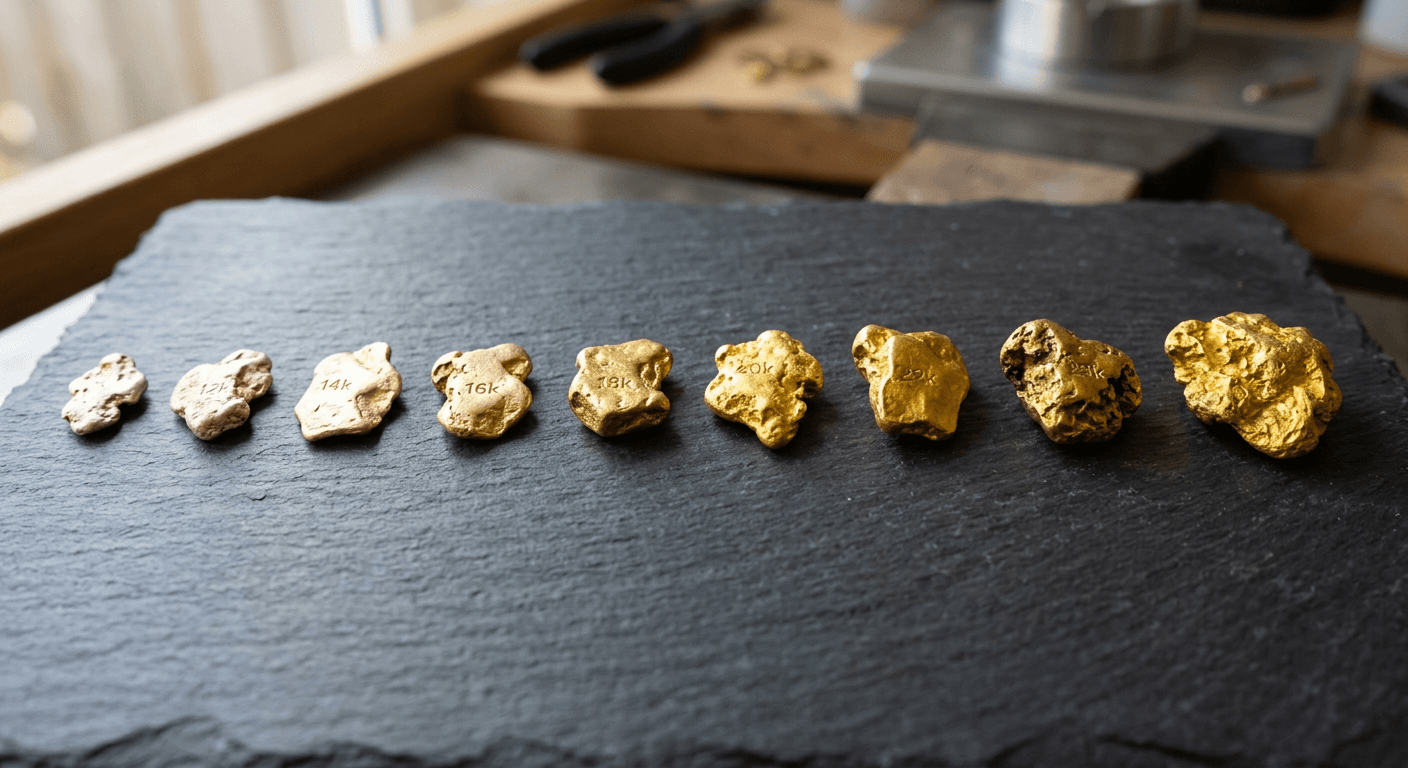
Gold Karat Chart: Complete Purity Reference
If you have ever looked at a piece of gold jewelry and wondered what those tiny numbers stamped inside really mean, you are not alone. The karat system is the universal language of gold purity, and understanding it is the single most important step toward making informed buying decisions. Whether you are shopping for an engagement ring, evaluating an inherited bracelet, or considering gold as an investment, this comprehensive gold karat chart gives you every number you need in one place.
This guide covers every standard karat value from 8K through 24K, explains the history behind the system, breaks down the alloy metals that make up non-pure gold, and highlights the international differences you should know about. Bookmark this page - it is the only gold purity reference you will ever need.
Quick Reference
Use our Gold Karat Calculator to instantly convert between karats, fineness, and purity percentages. Or look up any hallmark stamp with the Stamp Decoder.
What Is the Karat System?
The karat system measures the proportion of pure gold in an alloy. Pure gold is designated as 24 karat (24K), meaning all 24 parts out of 24 are gold. An 18 karat piece contains 18 parts gold and 6 parts other metals. A 14 karat piece contains 14 parts gold and 10 parts other metals.
The formula is straightforward:
Purity percentage = (Karat value / 24) x 100
So for 14K gold: (14 / 24) x 100 = 58.33% pure gold.
This fractional system has been in use for centuries, and it remains the dominant standard in the United States, United Kingdom, and many other countries. In continental Europe and parts of Asia, the fineness system (parts per thousand) is more common, but both systems describe the same thing - how much of the metal is actually gold.
History and Origins of the Karat System
The word "karat" traces its roots to the carob seed. In ancient markets across the Mediterranean, traders needed a consistent unit of weight for precious metals and gemstones. Carob seeds, which are remarkably uniform in size and weight (roughly 0.2 grams each), became a natural choice. The Greek word "keration" referred to both the carob bean and the unit of weight derived from it. This evolved into the Arabic "qirat" and eventually into the English "carat" for gemstones and "karat" for gold purity.
The 24-part division likely originates from the Roman solidus coin, which weighed 24 siliquae (another ancient unit based on carob seeds). By the medieval period, European goldsmiths had standardized the 24-karat scale. The system was formalized by various assay offices and guilds, particularly in London, where the Goldsmiths' Company has been hallmarking gold since 1300.
Today, the karat system coexists with the metric fineness system. The International Organization for Standardization published ISO 9202 (later revised as ISO 9202:2014), which defines preferred fineness values for precious metal alloys used in jewelry and related products. This standard ensures that when you see a "750" stamp in Italy or a "18K" stamp in the United States, they both mean exactly the same thing: 75% pure gold.
The Complete Gold Karat Chart
The table below is the definitive reference for every standard gold karat value. It includes the karat designation, metric fineness, purity percentage, gold content per gram, typical uses, and the most common stamps you will find on jewelry and bullion.
| Karat | Fineness | Purity % | Gold per Gram | Typical Uses | Common Stamps |
|---|---|---|---|---|---|
| 8K | 333 | 33.3% | 0.333 g | Budget jewelry (Germany, Scandinavia) | 333 |
| 9K | 375 | 37.5% | 0.375 g | Everyday jewelry (UK, Australia) | 375, 9K, 9ct |
| 10K | 417 | 41.7% | 0.417 g | Affordable jewelry (USA, Canada) | 417, 10K, 10kt |
| 12K | 500 | 50.0% | 0.500 g | Vintage jewelry, gold fill | 500, 12K, 12kt |
| 14K | 585 | 58.3% | 0.583 g | Most popular in USA (rings, chains, earrings) | 585, 14K, 14kt, 14ct |
| 18K | 750 | 75.0% | 0.750 g | Fine jewelry worldwide (engagement rings, watches) | 750, 18K, 18kt, 18ct |
| 20K | 833 | 83.3% | 0.833 g | Middle Eastern and Asian jewelry | 833, 20K |
| 21K | 875 | 87.5% | 0.875 g | Middle Eastern jewelry (Saudi Arabia, UAE) | 875, 21K |
| 22K | 916 | 91.7% | 0.917 g | Indian jewelry, gold coins, bullion | 916, 22K, 22kt, 22ct |
| 23K | 958 | 95.8% | 0.958 g | Specialty items, Thai baht jewelry | 958, 23K |
| 24K | 999 | 99.9% | 0.999 g | Investment bars, coins, some Asian jewelry | 999, 999.9, 24K, fine gold |
Understanding Fineness
The fineness number is simply the purity expressed in parts per thousand. A piece stamped "750" contains 750 parts gold per 1,000 parts total - which is exactly the same as 18 karat or 75% pure gold. Learn more about the 585 fineness stamp in our 585 Gold Meaning guide, or explore the 750 stamp in our 750 Gold Meaning guide.
Why Different Karats Exist: The Durability vs. Purity Tradeoff
Pure gold is a beautiful metal, but it is also remarkably soft. On the Mohs hardness scale, 24K gold scores just 2.5 - softer than a copper penny. This means pure gold scratches easily, bends under pressure, and wears down over time. For jewelry that needs to survive daily wear, pure gold is simply not practical.
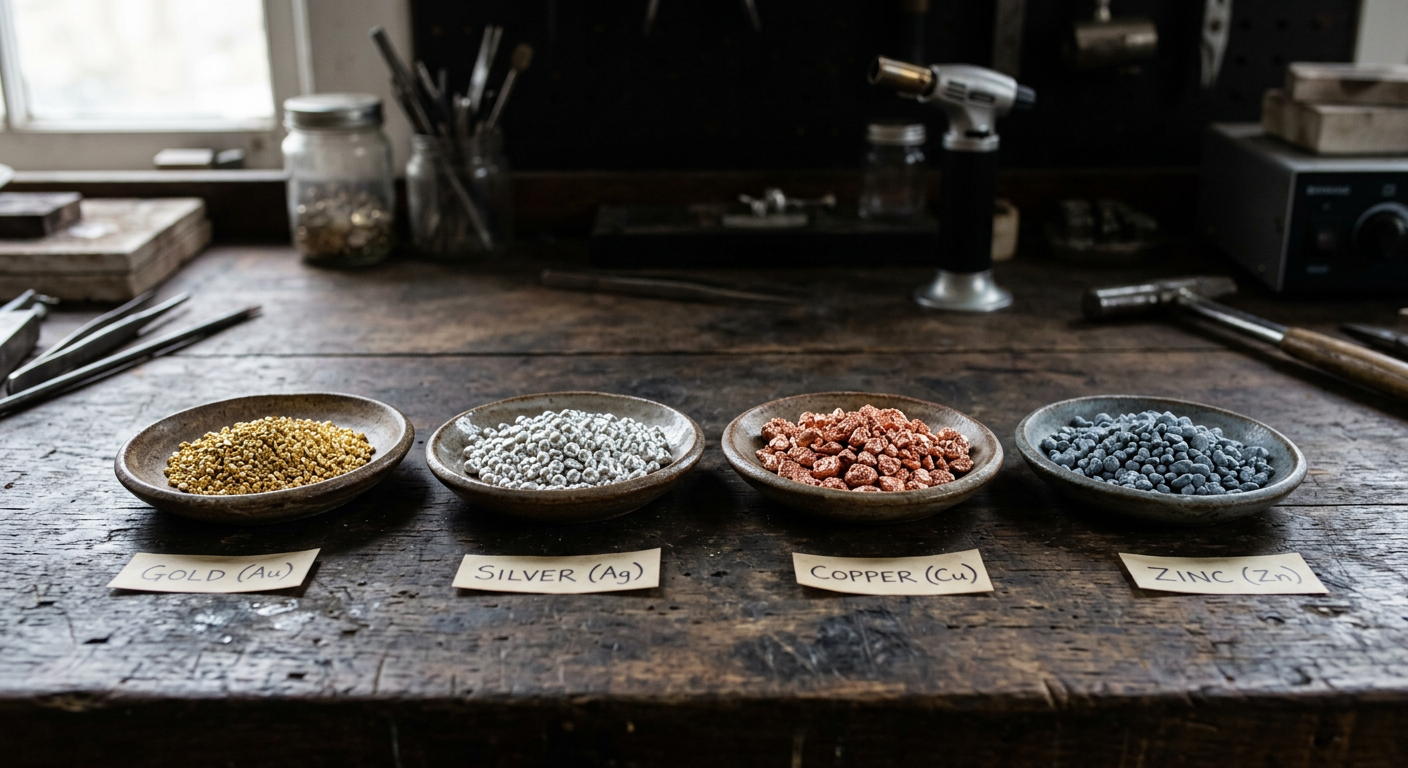
This is where alloying comes in. By mixing gold with harder metals like silver, copper, zinc, nickel, or palladium, jewelers create alloys that are harder, more scratch-resistant, and better suited to everyday use. The tradeoff is straightforward:
- Higher karat (more gold): Richer color, higher value per gram, better for sensitive skin, but softer and more prone to scratches and dents.
- Lower karat (less gold): Harder and more durable, more affordable, holds its shape better in thin designs, but paler color and lower intrinsic gold value.
This is why 14K gold is the most popular choice in the United States for everyday jewelry like wedding bands and chain necklaces - it hits the sweet spot between durability and gold content. Meanwhile, 22K and 24K gold dominate in India and parts of the Middle East, where gold jewelry is valued primarily as a store of wealth and the rich yellow color is culturally preferred.
For a detailed breakdown of the two most popular fine jewelry karats, see our 14K vs 18K Gold Comparison.
Alloy Metals and Their Effects
The metals mixed with gold dramatically affect the finished product's color, hardness, and properties. Here is what each common alloying metal contributes:
Copper
Copper is the most widely used alloying metal in gold jewelry. It increases hardness and strength significantly while adding a warm, reddish tone to the gold. The more copper in the alloy, the more the gold shifts toward a rose or red color. Rose gold, which has surged in popularity over the past decade, gets its distinctive pink hue from a higher proportion of copper.
Silver
Silver adds hardness while maintaining a lighter, greener tone. Combined with copper, silver helps create the classic warm yellow gold color that most people picture when they think of gold jewelry. Pure gold mixed only with silver produces a green-gold alloy, though this is rare in mainstream jewelry.
Zinc
Zinc is typically used in smaller proportions as a secondary alloying element. It improves the alloy's casting properties, lowers the melting point, and adds hardness. Zinc helps produce brighter, whiter gold tones and is commonly found in white gold alloys alongside palladium or nickel.
Nickel
Nickel was historically the primary whitening agent in white gold alloys. It produces a hard, strong, pale alloy at low cost. However, nickel is a known allergen - roughly 10% to 15% of the population has some degree of nickel sensitivity. This has led many countries (particularly in the European Union, under the Nickel Directive) to restrict its use in jewelry that contacts the skin. Modern white gold formulations increasingly favor palladium or platinum-group metals instead.
Palladium
Palladium is a platinum-group metal used to create hypoallergenic white gold. It produces a naturally white alloy that often does not require rhodium plating (unlike nickel-based white gold, which usually needs a rhodium coating to appear truly white). Palladium-based white gold is more expensive but is considered the premium choice for anyone with metal sensitivities.
Common Alloy Compositions by Karat
| Karat | Gold % | Silver % | Copper % | Other % | Notes |
|---|---|---|---|---|---|
| 10K Yellow | 41.7 | 6.0 | 44.8 | 7.5 (Zinc) | Hard, pale yellow |
| 14K Yellow | 58.3 | 10.0 | 28.0 | 3.7 (Zinc) | Classic warm yellow |
| 18K Yellow | 75.0 | 12.5 | 12.5 | 0.0 | Rich, deep yellow |
| 14K White | 58.3 | 0.0 | 21.0 | 20.7 (Palladium/Nickel/Zinc) | Requires rhodium plating with nickel |
| 18K White | 75.0 | 0.0 | 0.0 | 25.0 (Palladium) | Naturally white, hypoallergenic |
| 14K Rose | 58.3 | 0.0 | 41.7 | 0.0 | Popular pink tone |
| 18K Rose | 75.0 | 2.75 | 22.25 | 0.0 | Subtle pink, more gold-toned |
Color Variations Across Karats
Gold color is not just about being "gold colored." The karat level and the specific alloy metals create a wide spectrum of colors, and understanding this helps you choose the right piece.
Yellow Gold
Yellow gold gets progressively richer and more saturated as the karat increases. A 10K yellow gold ring has a distinctly paler, almost lemony hue compared to the deep, warm, buttery yellow of 22K or 24K gold. The difference is immediately visible when pieces of different karats are placed side by side.
- 10K yellow: Pale, slightly greenish-yellow
- 14K yellow: Warm gold with moderate saturation
- 18K yellow: Rich, deep yellow - the "classic gold" look
- 22K-24K yellow: Intense, almost orange-yellow with a soft, luxurious glow
White Gold
White gold achieves its pale color through the addition of whitening metals. At lower karats (10K-14K), nickel-based white gold can appear quite white because there is more whitening alloy relative to the gold. At 18K, the higher gold content gives the alloy a slightly warmer, champagne-like tint, which is why 18K white gold almost always receives a rhodium plating to achieve a bright silver-white finish.
Rose Gold
Rose gold owes its warm pink tone to copper. The color varies by karat:
- 10K rose: Very pink, almost copper-colored due to the high proportion of copper relative to gold
- 14K rose: Classic medium pink - the most popular rose gold tone
- 18K rose: Subtle blush-pink with a more golden undertone, softer and more refined
International Differences in Karat Standards
Gold purity standards vary significantly around the world. What is considered acceptable or standard in one country may not meet the requirements in another.
United States
In the United States, the Federal Trade Commission (FTC) regulates gold labeling. The minimum karat that can legally be sold as "gold" jewelry is 10K (41.7% pure). Items below 10K cannot be marketed as gold in the US. The FTC also permits a half-karat tolerance - meaning a piece stamped "14K" must contain at least 13.5 karats of gold. The most common karats sold in the US are 10K, 14K, and 18K, with 14K being the dominant choice for everyday jewelry.
United Kingdom and Commonwealth
The UK Hallmarking Act requires all gold items over a certain weight to carry an official assay office hallmark. Legal minimum fineness values in the UK are 375 (9K), 585 (14K), 750 (18K), 916 (22K), and 990 (approximately 23.76K). The four assay offices - London, Birmingham, Sheffield, and Edinburgh - each have their own distinctive mark. Australia and other Commonwealth nations use similar standards, with 9K being a popular minimum.
Continental Europe
Most European countries use the fineness (millesimal) system rather than karats. A piece of jewelry in Italy or France will be stamped "750" rather than "18K." Under EU regulations, 8K (333 fineness) is the minimum standard in Germany and Scandinavia, while other countries like France require a minimum of 18K (750 fineness) for items to be legally sold as gold.
India and South Asia
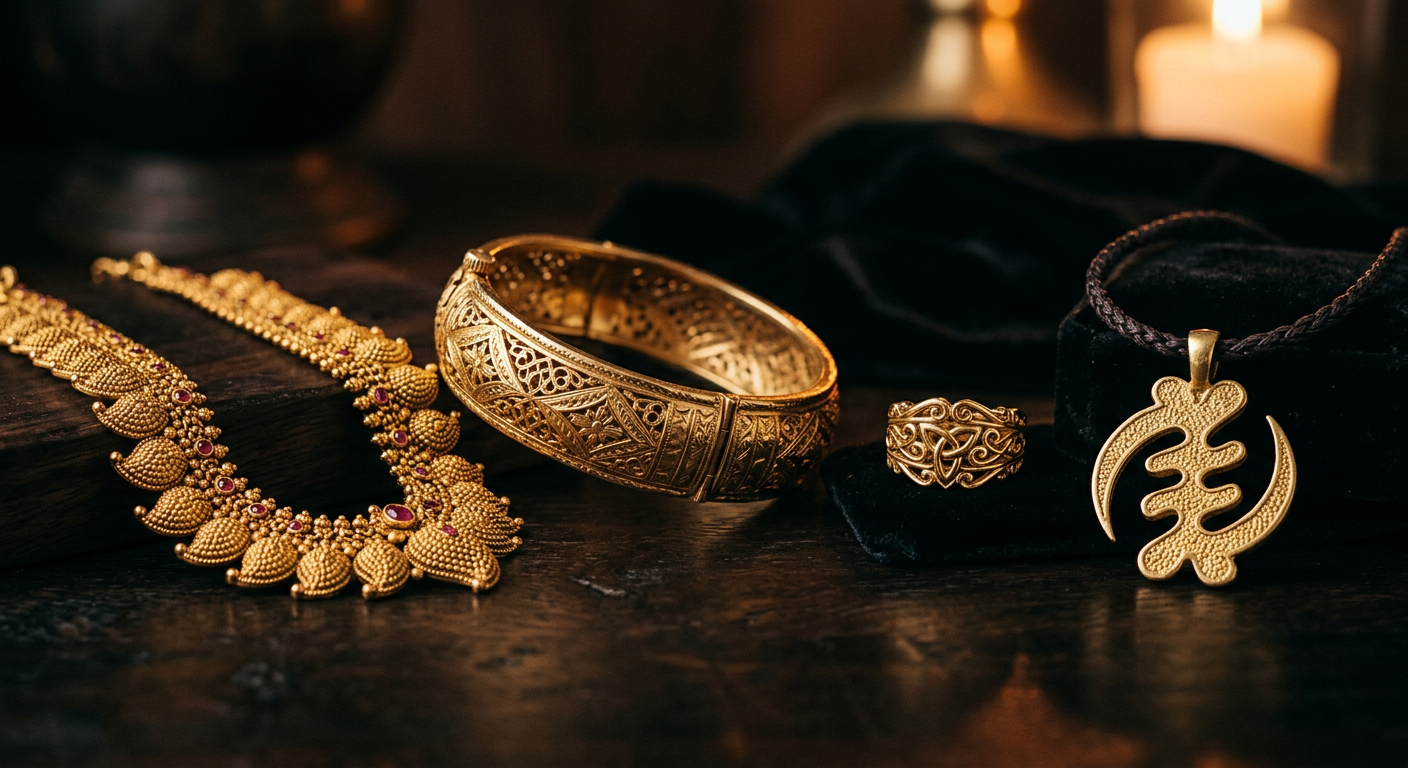
India is the world's second-largest consumer of gold jewelry, and the market strongly favors 22K gold. The Bureau of Indian Standards (BIS) operates the hallmarking system, and BIS-certified jewelry carries the fineness mark "916" for 22K gold. Indian consumers traditionally prefer the rich yellow color and high gold content of 22K, viewing jewelry primarily as a form of savings and investment.
Middle East
The Middle East, particularly Saudi Arabia, the UAE, Kuwait, and Bahrain, also favors high-karat gold. 21K (875) and 22K (916) are the most popular choices. Gold souks in Dubai and Riyadh display jewelry that is noticeably more yellow than what you would typically find in American or European jewelry stores.
East Asia
China and Hong Kong have traditionally favored 24K gold for jewelry, especially for wedding gifts and special occasions. The Chuk Kam (pure gold) tradition values 99.9% fineness above all else. Japan uses a system that includes 18K, 20K, and 24K, with 18K being popular for Western-style designs and 24K for traditional pieces. Thailand's standard is 23K (96.5% pure), commonly known as "Thai baht gold."
ISO 9202: The International Fineness Standard
ISO 9202:2014, titled "Jewellery and precious metals - Fineness of precious metal alloys," is the international standard that defines the preferred fineness values for gold, silver, platinum, and palladium alloys used in jewelry.
The preferred fineness values for gold alloys under ISO 9202 are:
- 333 (8K)
- 375 (9K)
- 585 (14K)
- 750 (18K)
- 916 (22K)
- 990 (approximately 23.76K)
- 999 (24K)
This standard does not mandate which fineness values a country must accept - that is left to national regulations. However, it provides a common reference framework so that "750" means the same thing whether you are in Tokyo, Milan, or New York.
The companion standard, ISO 11426, specifies the analytical methods for determining gold content in gold alloys. This is the standard that assay offices and testing laboratories follow when verifying the purity of gold jewelry and bullion.
Watch Out for Non-Standard Stamps
Not all stamps follow ISO 9202. You may encounter stamps like "417" (10K), "500" (12K), "625" (15K), or "833" (20K), which fall outside the preferred ISO values but are still legitimate in certain markets. If you find an unfamiliar stamp on your jewelry, use our Stamp Decoder to look it up, or read our guide on How to Tell If Gold Is Real.
How to Read Gold Stamps and Hallmarks
Gold jewelry carries stamps that indicate its purity. Knowing how to read these stamps is essential for any buyer or collector.
Karat Stamps (US Style)
In the United States, gold is typically stamped with the karat number followed by "K," "kt," or "KT." Common examples:
- 10K or 10kt - 10 karat (41.7% gold)
- 14K or 14kt - 14 karat (58.3% gold)
- 18K or 18kt - 18 karat (75.0% gold)
- 24K or 24kt - 24 karat (99.9% gold)
Fineness Stamps (European Style)
European and many international jewelers use the three-digit fineness number:
- 333 - 8 karat
- 375 - 9 karat
- 585 - 14 karat
- 750 - 18 karat
- 916 - 22 karat
- 999 - 24 karat
Additional Marks
Beyond the purity stamp, jewelry may also carry:
- Maker's mark: A symbol or initials identifying the manufacturer
- Assay office mark: Indicates which testing office verified the purity (common in the UK)
- Date letter: A coded letter indicating the year of hallmarking (UK tradition)
- Country mark: Some countries require a national symbol on all gold items
Stamps That Do Not Mean Solid Gold
Be aware of these stamps, which indicate gold-plated or gold-filled items - not solid gold:
- GF or 1/20 14K GF - Gold filled (a thick layer of gold bonded to a base metal)
- GP or GEP - Gold plated or gold electroplated
- HGE - Heavy gold electroplate
- RGP - Rolled gold plate
- Vermeil - Gold plating over sterling silver (minimum 2.5 microns)
These are not the same as solid gold and are worth significantly less. For more details on identifying real gold, see our comprehensive guide on How to Tell If Gold Is Real.
Choosing the Right Karat for Your Needs
The "best" karat depends entirely on how you plan to use the gold. Here is a practical guide:
For Everyday Jewelry (Rings, Bracelets, Watches)
Choose 10K or 14K. These karats offer the best combination of durability and gold content for pieces that will be worn daily. They resist scratches and dents far better than higher-karat options. 14K is the most popular choice in the US for engagement rings and wedding bands.
For Fine Jewelry and Special Occasions
Choose 18K. This is the standard for luxury jewelry worldwide. It offers a noticeably richer yellow color than 14K while still being durable enough for regular wear with reasonable care. Most high-end jewelry brands (Cartier, Tiffany, Bulgari) use 18K as their primary gold alloy.
For Investment and Wealth Storage
Choose 22K or 24K. When gold is valued primarily for its metal content rather than its design, higher purity is better. Gold coins like the American Gold Eagle (22K), the Canadian Maple Leaf (24K), and the South African Krugerrand (22K) are popular investment choices. Indian and Middle Eastern buyers often prefer 22K jewelry specifically because of its high intrinsic gold value.
For Sensitive Skin
Choose 18K or higher, preferably in a palladium-based white gold or standard yellow gold formulation. Higher karat gold contains less nickel and other potentially allergenic metals. If you know you have a nickel allergy, avoid nickel-based white gold entirely and opt for palladium white gold or pure yellow gold at 18K or above.
Use our Gold Karat Calculator to see exactly how much pure gold is in any piece based on its karat and weight.
Karat vs. Carat: Clearing Up the Confusion
One common source of confusion is the difference between "karat" and "carat." In the United States, these two words have distinct meanings:
- Karat (K): A measure of gold purity based on a 24-part scale. Used exclusively for gold alloys.
- Carat (ct): A unit of weight for gemstones, equal to 200 milligrams (0.2 grams). A 1-carat diamond weighs 0.2 grams.
In the United Kingdom and many other countries, the spelling "carat" is used for both gold purity and gemstone weight, with context making the meaning clear. If someone in London refers to "18-carat gold," they mean the same thing as "18-karat gold" in the United States.
Gold Purity and Pricing
Gold is priced by the troy ounce on global commodity markets, and the price you see quoted (the "spot price") refers to pure, 24K gold. When you buy jewelry, the gold value of the piece is proportional to its karat.
For example, if gold is trading at $2,000 per troy ounce:
| Karat | Gold Content | Value of Gold per Troy Ounce |
|---|---|---|
| 10K | 41.7% | $834 |
| 14K | 58.3% | $1,166 |
| 18K | 75.0% | $1,500 |
| 22K | 91.7% | $1,834 |
| 24K | 99.9% | $1,998 |
Of course, the retail price of jewelry includes much more than just the gold value. Design, craftsmanship, brand name, gemstones, and retail markup all contribute to the final price tag. The gold content tells you the minimum melt value of the piece - what it would be worth if you melted it down and sold the pure gold.
Calculate Your Gold's Value
Want to know the current gold value of your jewelry? Enter the weight and karat into our Gold Karat Calculator, which uses live spot prices to calculate the gold content value of any piece.
Frequently Asked Questions
Summary
The karat system is your key to understanding gold purity. Whether you see "14K" stamped on an American ring or "750" engraved on an Italian necklace, these numbers tell you exactly how much gold is in the piece. Higher karats mean more gold, richer color, and higher value - but also softer metal. Lower karats mean more durability and lower cost, at the expense of gold content and color intensity.
Use the chart on this page as your go-to reference whenever you are evaluating, buying, or selling gold. And remember: the right karat for you depends on how you plan to use the piece, your budget, and your personal preference for color and feel.
For hands-on exploration, try our Gold Karat Calculator to compute gold values instantly, or use the Stamp Decoder to look up any hallmark you encounter.